



Installed the app from here? Install it again from app.regenesis.chat.

Human Simulation Interface · 10+ personalities · PL / EN

10+ personalities available

A person built from his own words

Dozens of people built only from their public statements: episodes, lectures, speeches and letters. They answer by voice, in the language you speak. Every answer carries its source.

Sources
339
Fragments
88,695
Latest material
27.09.2026
Search time
190 ms
01 / 11 Scroll Regenesis · 2026

As of 29.10.2026

10+

Personalities

339

Sources

88,695

Fragments

190 ms

Search time

Roster · 10 live · 49 in the queue

People

PersonBuilt fromLanguageSourcesFragmentsStatus
prof. Majewskiprof. MajewskiBiblical studies · lectures
112 lectures, 6 books and 11 texts PL 177 12,635 Live
Nelson MandelaNelson MandelaSpeeches · letters · biography
speeches, letters, court statements and the biography EN 29 812 Live
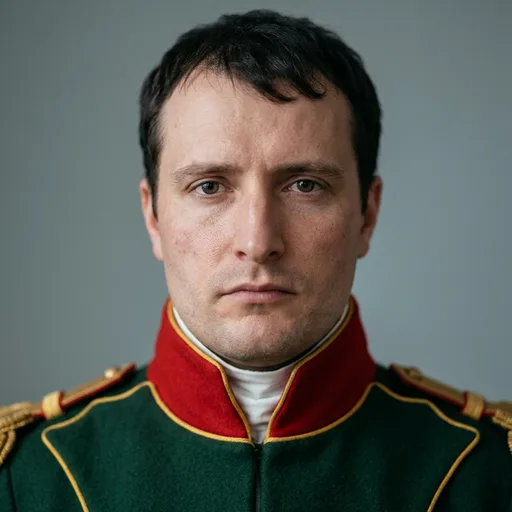
Napoléon BonaparteNapoléon BonaparteProclamations · memoirs
proclamations, letters, orders and memoirs dictated in exile FR 133 75,248 Live
Steve JobsSteve JobsKeynotes · interviews
keynotes, interviews and letters EN - - Queued
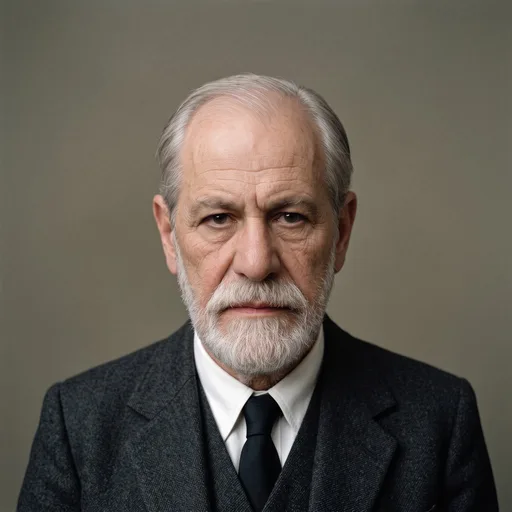
Sigmund FreudSigmund FreudPsychoanalysis · dreams
writings and lectures DE - - Queued

49 people in the queue · full list in the app

See all

Process · 03 steps

How it works

  1. 01

    Corpus

    Material,
    not memory.

    Episodes, lectures, books, letters. One source is one file with a date and a name. Nothing is made up.

  2. 02

    Search

    Two indexes
    at once.

    A query hits the dense and the sparse index at the same time, with a date filter. The result is fragments, not a summary.

  3. 03

    Voice

    A conversation,
    not a chat.

    The same material spoken live: video, sound and the transcript beside it.

Proof · one answer

Every sentence has an address.

Question

Why did you sell Louisiana?


Answer

I sold it because I needed cash for the war, and the colony cost more than it brought in. The money went to the fleet and the army, not to Louisiana.

9 fragmentsLatest 05.05.18213 sources

Sources

  1. 01napoleon-1803-04-30-traite-louisiane.txt30.04.1803

    Fragment 0212-0249

  2. 02napoleon-1803-04-11-memoire-tresor.txt11.04.1803

    Fragment 0074-0108

  3. 03napoleon-1821-04-15-testament.txt15.04.1821

    Fragment 0301-0334

A full trail with every answer. No trail, no answer.

Live · video and voice

A voice crosses
the room.

Example · Napoléon Bonaparte

  • 02:14 / 10:00
  • EN
  • 9 sources

This is not the real person.

Examples · 03 questions to Napoléon

What people
ask.

Napoléon Bonaparte A simulation, not a person

I sold Louisiana because I had no way to defend it and every reason to want the money and the goodwill.

The facts: by the secret Treaty of San Ildefonso (1800) Spain had returned the vast territory to France, but by 1803 the peace of Amiens was already fragile and a war with England was coming. A French garrison in Louisiana could be cut off by the Royal Navy in a week. The colony was a hostage I could not keep. So in April 1803 I sold it to the United States for about fifteen million dollars, roughly sixty million francs, of which some of the sum went to settle claims.

What did I do with it? I put it where the state most needed it: the treasury, the army, and the preparations for the war that I now considered inevitable. It was, in my own terms, a calculation of means. The money helped pay for the camps on the Channel coast that would have carried an invasion to England had the war not turned elsewhere. And the sale bought something worth more than the francs: the friendship of the United States, and a rival removed from my flank.

I did not sell it because I loved the Americans. I sold it because I could not hold it, and because the cash was better in my hands than a colony in theirs by force.

5 fragments · Latest 05.05.1821

Napoléon Bonaparte A simulation, not a person

I did not need one code for all of Europe. I needed one code for France, and I made it.

Before 1804 France had two legal worlds: the written law of the south, descended from Rome, and the customary law of the north, with some sixty general customs and hundreds of local ones. A man could not know the law that governed his own field, his own marriage, his own will. That is not a state; that is a maze. The Code civil, promulgated in March 1804, made one law, written in French, clear enough for a notary to apply and a citizen to read. That was the object, and it succeeded: it is the part of my work that has outlived every battle.

Where I extended it beyond France — in the annexed departments, in Italy, in the Confederation of the Rhine — I did so because a single administration needs a single rule. It was a tool of government, not a mystical union of Europe. I had no notion of a European code as such, and I will not pretend to one.

And it had a cost you should name with the achievement: the Code fixed the wife under the authority of the husband and gave him the administration of the common property. The uniformity was real; so was the inequality written into it.

5 fragments · Latest 05.05.1821

Napoléon Bonaparte A simulation, not a person

I did not lose it in a single moment of realisation. The record shows a series of decisions, each one defensible and each one too late.

The fire decided the first thing. I had counted on winter quarters in Moscow; the city burned, and with it the supplies I needed. In the Mémorial I put it plainly: I was prepared for everything except that event. I stayed in the Kremlin until the flames surrounded me, and I left five days too late — that is my own judgement on myself, dictated at St Helena.

After that it was arithmetic. The retreat was a calculation of distance, roads, horses and cold, and the calculation failed at each stage. The crossing of the Berezina in late November 1812 is the point where the army as an instrument ceased to exist, whatever the bulletins said.

So if you want a date: the fire in September, the ruin at the Berezina in November, and my own admission of the five lost days afterwards. The truth is that I understood it in pieces, and refused to say it whole for a long time.

5 fragments · Latest 05.05.1821

Full list of questions in the app

See the people

Project rules · transparency

These are not those people.

  1. 01

    Labeled

    A simulation, not a person.

    Every answer is signed as a clone. We never pretend to be the real person.

  2. 02

    Public

    Public material only.

    Episodes, books, speeches, letters. Nothing private, nothing from correspondence that was never published.

  3. 03

    Removable

    One request and it's gone.

    One request from the person or an heir removes the material from the index.

Pricing · no commitment

Pricing

Billing period
  • Demo

    00PLN/ month/ year


    3 minutes a call and 10 messages a month.

    [ Start ]
  • Basic

    39390PLN/ month/ year


    More minutes and messages, with every person.

    [ Choose Basic ]
  • Most popular

    Pro

    99990PLN/ month/ year


    Long conversations and the highest limits.

    [ Choose Pro ]
  • Custom

    QuoteOn request


    For teams, newsrooms and institutions.

    [ Contact us ]

Questions and answers

Common questions

01Am I talking to a real person?

No. You are talking to a digital representation of a person, created with artificial intelligence from the material they left behind.

Regenesis does not restore consciousness or contact the dead. It offers an interactive conversation based on the documented statements, knowledge and way of expressing views of a specific person.

02What sources are the figure's answers based on?

We build each figure from material that came from the person: their books, articles, letters, speeches, interviews and other preserved statements. The basis is the person's own words, not interpretations of their views prepared by historians, biographers or analysts.

The answers are still generated by AI. They may be new statements built from the sources rather than direct quotes. Our aim is fidelity to what the person actually said and wrote, without attributing undocumented beliefs to them.

03Are the figure's answers authentic quotes?

Not every answer is a quote. The figure writes answers to your questions using the material it was built from.

Unless a statement is clearly marked as a quote, treat it as AI-generated content, not as a sentence the person actually said or wrote. If you plan to cite it as a historical statement, check its wording in the original source first.

04Can the figure be wrong?

Yes. Even with source material behind it, AI can misread a statement, mix up context or give an imprecise answer.

Regenesis is for getting to know the figures and exploring their work. It does not replace checking the sources. If you want to use an answer in a publication, academic work or anything else that needs accuracy, verify it in the original material.

05Why do historical figures not comment on events after their death?

The limit of a historical figure's knowledge is the end of their life. We reconstruct their perspective from what they could have known, lived through and said while alive.

So we do not attribute opinions about later events to them, or present them as a contemporary commentator. That would mean inventing views they never had a chance to express. The memory of your conversations is a separate layer: it lets the contact continue, but it does not move the historical limit of the figure's knowledge.

06Does the figure remember me between conversations?

Yes. When you use the same account, the figure keeps the memory of earlier conversations. It may remember your name if you give it, the topics you raised, earlier questions and the context of your acquaintance.

The next session is a continuation, not a conversation from scratch. The memory belongs to your account and to that specific figure.

07Who can see my conversations and how are they used?

In short: we keep conversations so the figure remembers your relationship, and only the people and companies that run the service can reach them. We do not sell data or use it for advertising.

What reaches us: the text of your chat messages, the last 8 messages and notes about the relationship, such as your name, the topics and the facts you share, plus usage counters. In a video call, Anam receives the sound from your microphone, the transcript and a recording, which it keeps for up to 30 days. Your camera picture stays on your device and we never send it anywhere.

Who receives the content: DeepSeek receives your messages together with the relationship memory and writes the figure's replies. Supabase in Frankfurt stores the relationship memory and counters, and Qdrant receives your message as numbers, not as text.

What we do not do: we do not sell data, we do not use it for advertising, and under Anam's policy conversation content does not train models. DeepSeek processes the content outside the EEA on the basis of your consent, which you give by signing in.

The full description, including retention periods and your rights, is in the privacy policy.

08Can I delete my conversation history and make the figure forget me?

There is no button today that deletes your chat history or the figure's memory. We handle these requests by hand. Write to privacy@regenesis.chat from the address the account belongs to.

What we can delete: the relationship memory with a given figure, which includes the last 8 messages and the facts and topics it remembered. Chat history is part of that memory, so deleting the memory also deletes the stored messages. We can also delete the whole account and all data attached to it. After the account is deleted, we remove them from our database within 30 days.

What cannot go at once: video call recordings at Anam disappear within 30 days, and invoices and payment records stay for as long as tax law requires, also after the account is deleted.

09Why is the gallery home to controversial figures too?

History includes not only people we admire, but also people whose views, decisions and actions provoke opposition or deserve condemnation. Their presence in Regenesis comes from their historical significance, not from approval of what they did.

Some people had a tragic or destructive influence on history. Exploring their perspective can help us understand the past, but it does not excuse their actions. You decide whom you talk to, and you do not have to share any figure's views or feel any sympathy for them.

10Can I ask hard questions and disagree with the figure?

Yes. You can ask about controversial decisions, point out contradictions and challenge the views presented. The conversation does not require admiration or agreement.

Regenesis is built so the figure answers from its own documented beliefs and experience, rather than adjusting its position to match the person it is talking to.

11Does the figure present facts or its own perspective?

Above all, it presents the perspective of a specific person. Source material can contain both information about events and personal judgements, prejudices, mistaken beliefs or attempts to justify the person's own actions.

The fact that a statement really came from the person does not mean it is true. Fidelity to the sources means telling apart what the figure claimed from what actually happened.

12What happens when there is not enough material to answer my question?

Not every person left statements on every subject. If the collected material gives no basis for an answer, the figure should mark that limit rather than claim undocumented memories, experiences or opinions.

The aim of Regenesis is not an answer at any cost, but a conversation as faithful as possible to the available sources. If an answer leaves you unsure, check it in the original material.

13Will there be new figures, and how can I suggest someone?

Yes. The Regenesis gallery will keep growing with new people. New figures appear once their source material has been collected and prepared and their conversation version is ready. It is worth checking the gallery from time to time.

You can also send us a suggestion at contact@regenesis.chat. Tell us whom you want to see in Regenesis and why. If you know of available books, recordings or other material by that person, point us to them in your message.

14Can I publish excerpts from conversations?

Do not present excerpts as authentic statements by the person. If you share them, state clearly that they come from a conversation with the person's AI digital representation in Regenesis.

Example label: "Excerpt from a conversation with the AI digital representation of [name] in Regenesis. Generated by AI, not an authentic quote from this person."

This answer covers labelling only. It is not permission to publish or to use the text commercially. The rules for sharing and reuse are in the terms of service. If you need permission, write to contact@regenesis.chat.

Early access · waitlist

Get in first.

Sign up for early access to the beta at a lower price. The demo is free right now: 3 minutes a call.

No card · demo forever

No spam. One email when the beta opens.